Top 5 Full Stack Technologies Every Developer Should Master in 2025
Discover the top 5 full stack development technologies every developer should master in 2025 to build scalable, efficient, and modern web applications.
Introduction
The demand for Full Stack Developers is skyrocketing in 2025. Companies now seek professionals who can handle front-end and back-end development, manage databases, and streamline deployment.
But with hundreds of new technologies released every year, which ones really matter?
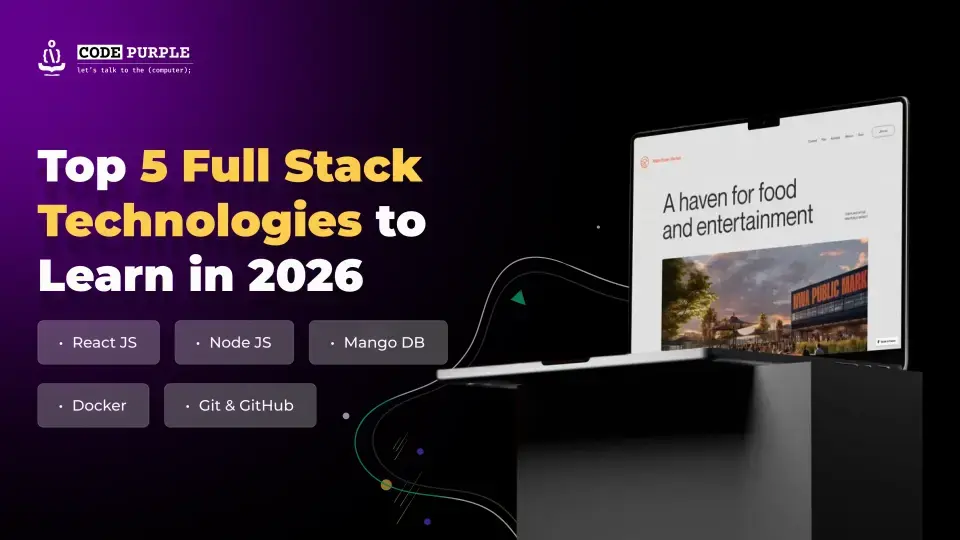
Here’s a breakdown of the top 5 full stack technologies every developer should master to stay competitive and productive in the modern tech world.
1. React.js — The Powerhouse for Front-End Development
React.js continues to dominate the front-end landscape in 2025. Backed by Meta (Facebook), it helps developers build fast, scalable, and interactive user interfaces.
Key Benefits:- ● Component-based structure for reusable code.
- ● Great compatibility with frameworks like Next.js for server-side rendering.
- ● Strong community support and frequent updates.
Pro Tip: Use React + TypeScript for type-safe and maintainable codebases.
2. Node.js — The Backbone of Modern Back-End
Node.js is the go-to tool for full stack developers who want to use JavaScript across the entire stack. It enables non-blocking, event-driven architecture that supports scalable network applications.
Why It’s Essential in 2025:- ● High performance for real-time applications.
- ● Large open-source ecosystem (NPM).
- ● Perfect for building APIs and microservices.
Pro Tip: Pair Node.js with Express.js for cleaner routing and easy API management.
3. MongoDB — The Future of NoSQL Databases
MongoDB offers flexibility and scalability for data storage. Its document-based structure allows developers to handle both structured and unstructured data effortlessly.
Why It’s Popular in 2025:- ● Handles large data volumes seamlessly.
- ● Works perfectly with Node.js for MERN Stack projects.
- ● Cloud version (MongoDB Atlas) simplifies deployment.
Pro Tip: Learn Mongoose ORM to connect MongoDB with Express for efficient data modeling.
4. Docker — Streamlining Deployment
Docker has become essential for full stack developers working with DevOps workflows. It packages your code and dependencies into containers, ensuring consistency across all environments.
Benefits:- ● Simplifies deployment and testing.
- ● Reduces compatibility issues.
- ● Works seamlessly with Kubernetes for scaling.
Pro Tip: Automate Docker builds using CI/CD technologies like GitHub Actions or Jenkins.
5. Git & GitHub — Collaboration and Version Control
Git is the backbone of modern software collaboration. Platforms like GitHub make it easy to host repositories, manage pull requests, and enable continuous integration.
Why It’s Non-Negotiable in 2025:- ● Enables smooth teamwork and code management.
- ● Crucial for open-source contributions.
- ● Integrates with popular deployment tools.
Pro Tip: Learn branching strategies (like GitFlow) to manage complex projects effectively.
Conclusion
The tech landscape changes fast — but mastering these five technologies ensures you stay ahead.
If you’re serious about becoming a Full Stack Developer in 2025, invest time in learning React.js, Node.js, MongoDB, Docker, and GitHub.
Each tool plays a crucial role in helping developers build robust, efficient, and scalable applications — skills that employers value worldwide.
Share this article
Ready to Start Your Tech Journey?
Join Code Purple Academy and transform your career with industry-leading courses