Where to find cloud-based data science tools
Wondering where to find cloud-based data science tools for your next project? Here’s a practical look at platforms that make analytics and modeling easier.
1. Introduction
1.1 The Shift from Local to Cloud EnvironmentsData science once depended heavily on on-premises infrastructure. Workstations hummed under desks. Servers occupied temperature-controlled rooms. Scaling required capital expenditure and logistical patience.
Today, computational workloads have migrated to elastic cloud environments. Instead of provisioning hardware, practitioners instantiate virtual machines in minutes. Storage expands dynamically. Compute clusters materialize and dissolve as needed. This paradigm shift has democratized access to high-performance analytics, removing barriers that once constrained experimentation.
1.2 Why Cloud-Based Tools Matter Today?Cloud-based data science tools offer ubiquity and flexibility. Teams collaborate across continents in real time. Version-controlled notebooks, shared datasets, and managed pipelines foster cohesion.
If you're exploring modern Data Science Tools for analytics, automation, or machine learning workflows, cloud platforms now provide scalable, ready-to-use environments without heavy infrastructure investment.
More importantly, the cloud enables horizontal scalability. Massive datasets, terabytes or petabytes, can be processed through distributed architectures without localized bottlenecks. This elasticity empowers organizations to innovate without infrastructural paralysis.
2. Major Cloud Service Providers
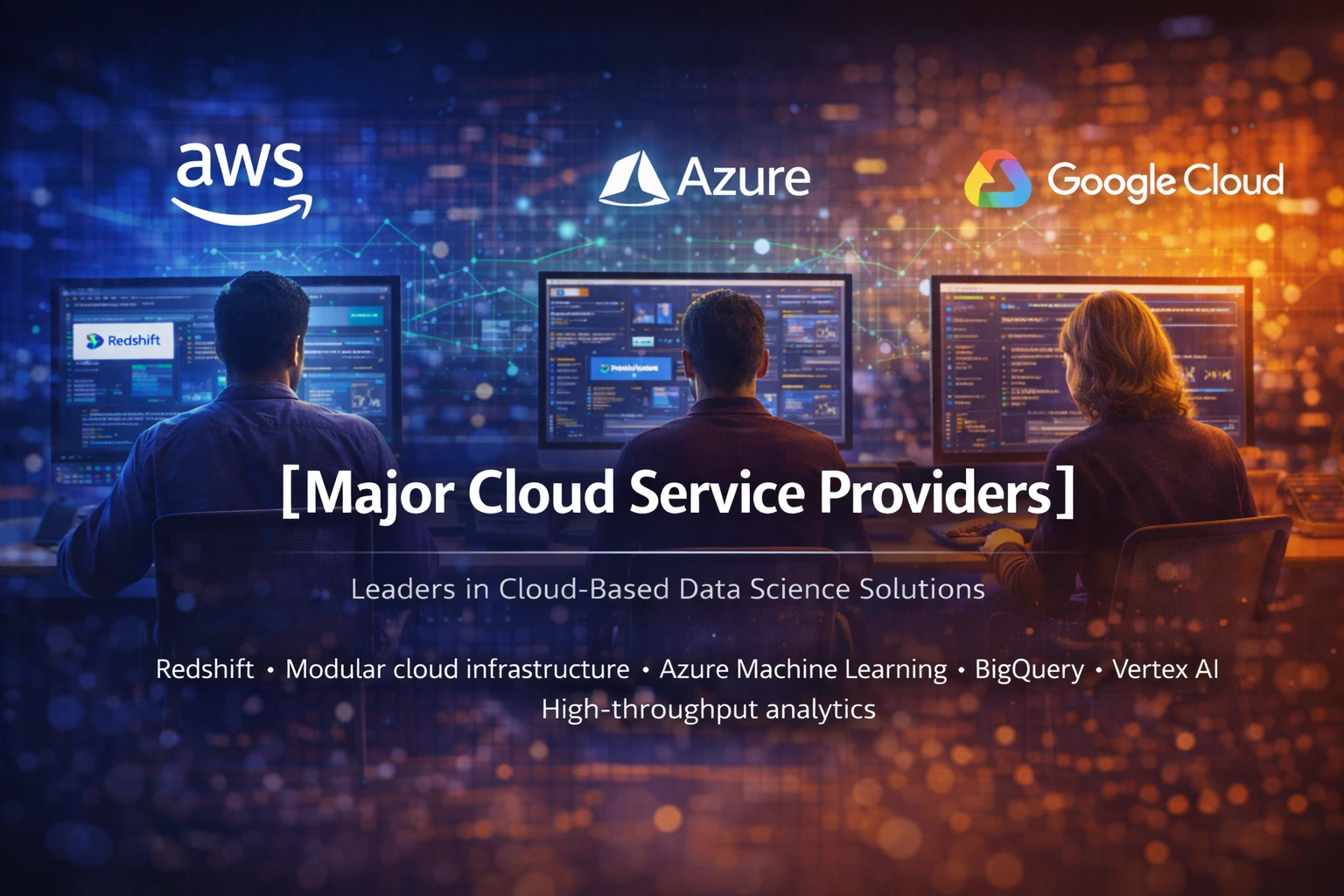
2.1 Amazon Web Services PlatformsAmazon Web Services provides a comprehensive suite of data science tools, including Amazon SageMaker for model development and Amazon Redshift for data warehousing. Its infrastructure emphasizes modularity. Users can orchestrate workflows with granular control, integrating storage, analytics, and AI capabilities into cohesive pipelines.
AWS also supports serverless computation, reducing operational overhead. This abstraction allows data scientists to concentrate on modeling rather than maintenance.
2.2 Microsoft Azure EcosystemMicrosoft Azure integrates seamlessly with enterprise systems. Azure Machine Learning offers collaborative workspaces, automated ML, and MLOps functionality.
The ecosystem’s interoperability with productivity tools enhances cross-departmental synergy. Security frameworks and compliance certifications further strengthen its appeal for regulated industries.
2.3 Google Cloud OfferingsGoogle Cloud delivers robust analytics solutions such as BigQuery and Vertex AI. Its architecture excels at handling large-scale data processing with minimal latency.
Google’s heritage in search and distributed systems permeates its cloud offerings. The result is a performant, developer-friendly environment optimized for high-throughput computation.
3. Specialized Data Science Platforms
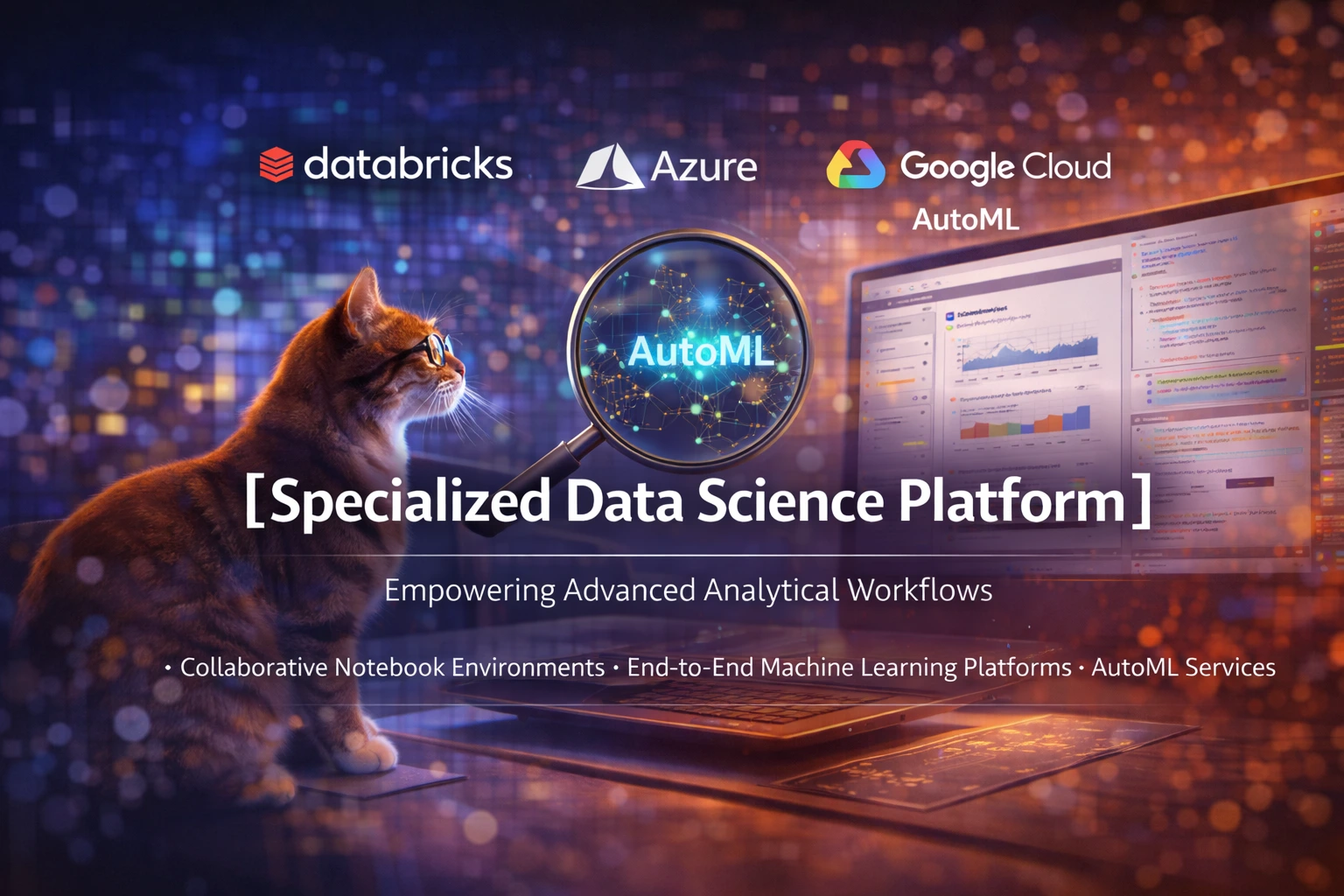
3.1 Collaborative Notebook EnvironmentsCloud-hosted notebook platforms such as Google Colab and Databricks enable synchronous development. Data scientists can write, execute, and annotate code within browser-based interfaces.
These environments facilitate reproducibility and transparency. Shared kernels and persistent storage ensure that analyses remain accessible and verifiable.
3.2 End-to-End Machine Learning PlatformsComprehensive platforms manage the entire model lifecycle: Data ingestion, Feature engineering, Model training, Deployment, and Monitoring.
Such vertical integration reduces fragmentation. Many modern Data Science Tools now emphasize unified ecosystems to simplify governance, deployment, and lifecycle management.
3.3 Automated Machine Learning ServicesAutoML services abstract algorithm selection and hyperparameter tuning. They expedite experimentation and lower technical barriers.
While not a panacea, they provide a pragmatic entry point for organizations seeking predictive insights without extensive in-house expertise.
4. Open-Source Tools Hosted in the Cloud
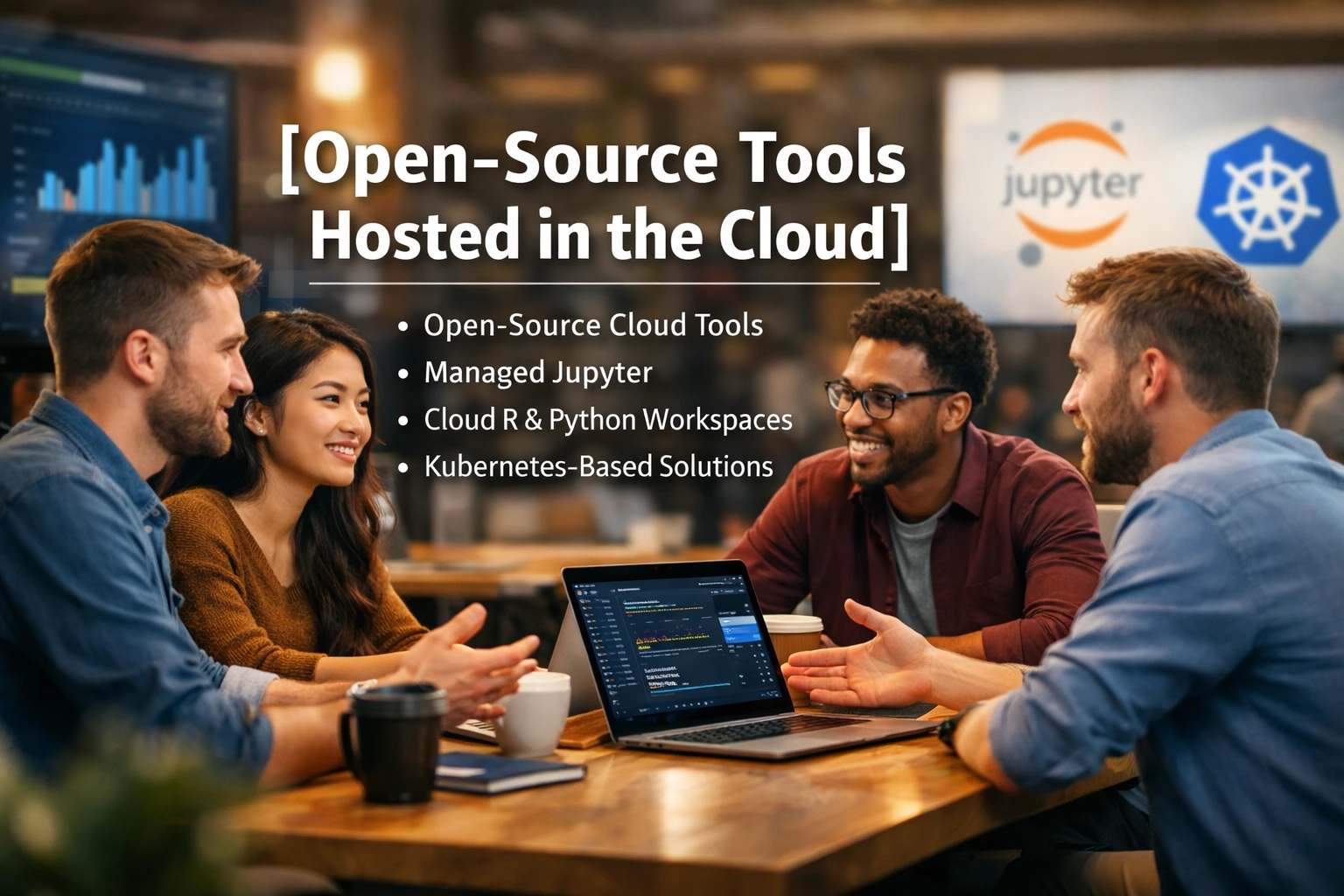
4.1 Managed Jupyter EnvironmentsProject Jupyter remains foundational in data science. Many cloud providers offer managed Jupyter instances, eliminating configuration complexity.
Users benefit from familiar interfaces while leveraging scalable backend resources that power modern Data Science Tools across collaborative and production-ready environments.
4.2 Cloud-Based R and Python WorkspacesPlatforms like RStudio (now Posit Workbench) and browser-based Python environments allow analysts to access development workspaces without local installation.
This approach enhances portability. Work continues uninterrupted across devices and locations.
4.3 Containerized and Kubernetes-Based SolutionsContainer orchestration platforms such as Kubernetes enable reproducible deployments. Environments are encapsulated. Dependencies remain consistent.
Such architectural rigor mitigates the perennial issue of environment drift, preserving analytical integrity.
5. Data Marketplace and API Providers
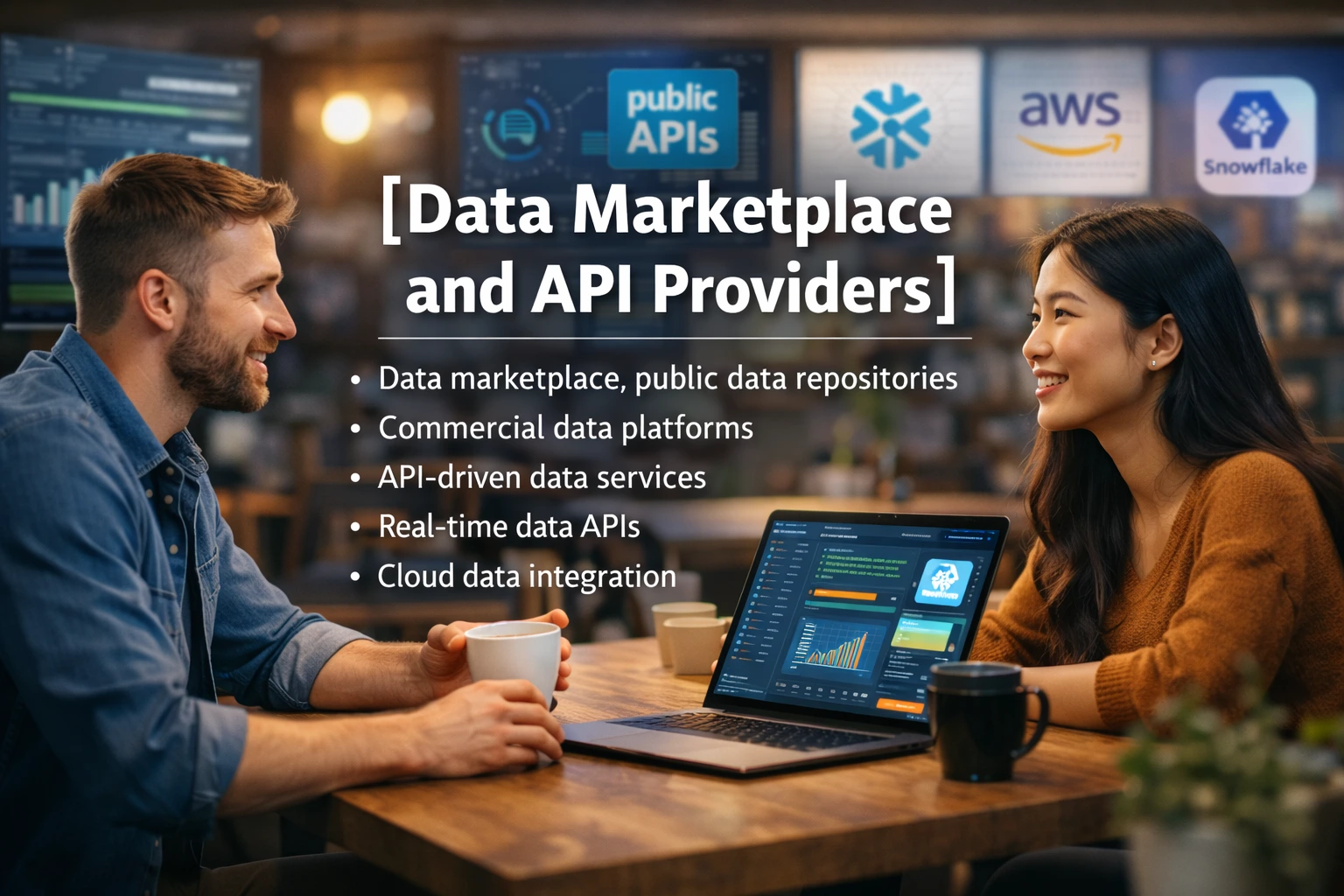
5.1 Public Data RepositoriesGovernments and research institutions publish open datasets via cloud portals. These repositories often integrate directly with analytics platforms, simplifying ingestion.
They serve as fertile ground for exploratory modeling and hypothesis generation.
5.2 Commercial Data PlatformsCommercial marketplaces provide curated datasets for specialized domains. Access is typically subscription-based.
The value lies in data quality and timeliness. Curated sources reduce preprocessing overhead and accelerate deployment cycles.
5.3 API-Driven Data ServicesAPIs furnish real-time data streams, including financial markets, weather systems, and social media sentiment.
Cloud-based tools often integrate these feeds natively, enabling continuous model retraining and dynamic dashboards.

6. Industry-Specific Cloud Data Science Solutions
6.1 Healthcare and Life SciencesHealthcare platforms incorporate regulatory safeguards and anonymization protocols. They support genomic analysis, clinical trial modeling, and epidemiological forecasting.
Cloud elasticity proves indispensable when processing high-dimensional biomedical datasets.
6.2 Finance and FintechFinancial institutions rely on cloud-based analytics for fraud detection and risk modeling. Low-latency computation is critical.
Advanced encryption and compliance frameworks ensure fiduciary responsibility remains intact.
6.3 Retail and E-CommerceRetailers utilize predictive analytics to optimize inventory and personalize recommendations. Cloud tools enable rapid iteration during peak demand cycles.
Scalable architectures accommodate fluctuating traffic with equanimity.
7. Educational and Community Resources
7.1 University-Sponsored Cloud LabsAcademic institutions increasingly provide cloud lab environments for students. These labs simulate enterprise-scale infrastructures and distributed systems.
Learners gain experiential familiarity with collaborative analytics and collaborative analytics and the practical application of modern Data Science Tools used across industries.
7.2 Online Learning PlatformsEducational platforms frequently partner with cloud providers to offer sandbox environments. Students experiment without incurring substantial costs. Hands-on immersion accelerates skill acquisition and reinforces theoretical understanding.
7.3 Developer Communities and ForumsDeveloper communities disseminate best practices and troubleshooting insights. Documentation hubs, open repositories, and peer forums collectively enrich the ecosystem.
Knowledge circulates. Innovation proliferates.

8. Selecting the Right Platform
8.1 Evaluating Scalability and PerformanceAssess workload characteristics carefully when selecting modern Data Science Tools. Consider concurrency demands, dataset magnitude, and latency tolerance.
Benchmarking under realistic conditions reveals performance thresholds and informs architectural decisions.
8.2 Security and Compliance ConsiderationsData governance cannot be an afterthought. Evaluate encryption standards, identity management protocols, and audit capabilities.
Regulated sectors must prioritize adherence to statutory frameworks and compliance certifications.
8.3 Cost Structures and OptimizationCloud pricing models vary. Compute hours, storage tiers, and data egress fees accumulate over time.
Strategic cost optimization involves rightsizing instances, leveraging reserved capacity, and monitoring usage metrics meticulously to prevent budgetary drift.
9. Frequently Asked Questions
What are cloud-based data science tools?Cloud-based data science tools are online platforms that provide computational infrastructure, storage, and analytical frameworks through remote servers rather than local machines. They support data analysis, machine learning, artificial intelligence modeling, and large-scale data processing.
Where can beginners find cloud-based data science tools?Beginners can explore major providers such as Amazon Web Services, Microsoft Azure, and Google Cloud, all of which offer free tiers or trial credits. Managed notebook environments and educational cloud labs provide low-friction entry points.
Are cloud-based data science tools secure?Leading providers implement enterprise-grade encryption, identity access management, audit logging, and compliance certifications. When configured properly, these environments can exceed traditional on-premises security standards.
What is the cost of using cloud-based data science tools?Costs typically follow a pay-as-you-go model based on compute, storage, and data transfer. Optimization strategies include reserved instances, workload scheduling, and continuous monitoring of resource utilization.
Which tools are best for machine learning?Platforms such as Amazon SageMaker, Azure Machine Learning, and Vertex AI provide integrated environments for training, deployment, and monitoring, supporting automated tuning and distributed training.
How do cloud-based tools support AI development?They provide high-performance GPUs, distributed clusters, and prebuilt AI frameworks. Many include pre-trained models and APIs that reduce development time while enhancing predictive precision.
Why are they important for businesses?They enable real-time analytics, predictive modeling, and automation at scale, transforming raw data into strategic intelligence while minimizing capital expenditure.
10. Conclusion
Cloud-based data science tools have moved from being an emerging option to a core part of modern analytics strategy. They provide the flexibility, scalability, and speed that traditional systems struggle to match.
For organizations willing to modernize their workflows, the cloud offers a clear advantage: faster experimentation, easier collaboration, and the ability to scale with confidence. The tools are widely available. The ecosystems are well-developed.
The next step is strategic adoption, aligning cloud-based data science platforms with your specific goals and building processes that turn data into measurable impact.
Share this article
Ready to Start Your Tech Journey?
Join Code Purple Academy and transform your career with industry-leading courses