The Unfair Advantage: 7 Benefits of Being a Full Stack Developer in a Competitive Market
Unlock the 7 key advantages of being a full stack developer. Boost your value, salary, and job security. Learn how to get ahead now!
Introduction
Start by explaining what a full stack developer is in simple terms and how this role fits into modern web development. Then highlight the growing demand for people who can work on both front end and back end systems. In a crowded job market, show how being a full stack developer offers a real edge—an “unfair advantage.” Finally, give a brief preview of the seven key benefits the article will cover.
Understanding the Full Stack Developer Role
In today’s fast-paced world of web development, the full stack developer role is one of the most flexible and in-demand positions. A full stack developer works on both front end development, which shapes what users see and interact with, and back end development, which manages server logic, data, and performance. This mix of skills helps developers see the whole picture and build smooth, end-to-end digital experiences.
As web development has evolved, the full stack developer role has become even more dynamic. Companies want speed and efficiency, so developers who can connect design, user experience, and technical systems are highly valued. Being able to move between tasks like building responsive interfaces, handling APIs, and tuning server performance speeds up delivery and reduces miscommunication within teams.
If you want to become a full stack developer, start with the basics: HTML, CSS, and JavaScript. Then add at least one back end language, such as Node.js, Python, or Java, and learn how to work with databases. It also helps to understand cloud platforms and version control tools like Git.
For practical progress, build small, end-to-end projects that run from design to deployment. This is the quickest way to see how all the parts fit together and where you need to improve. Keep your skills current by exploring new frameworks and joining open-source or developer communities. Over time, mastering the full stack developer role becomes less about knowing every tool and more about continuous learning, curiosity, and creating clear, cohesive solutions.
Understanding the Seven Unfair Advantages
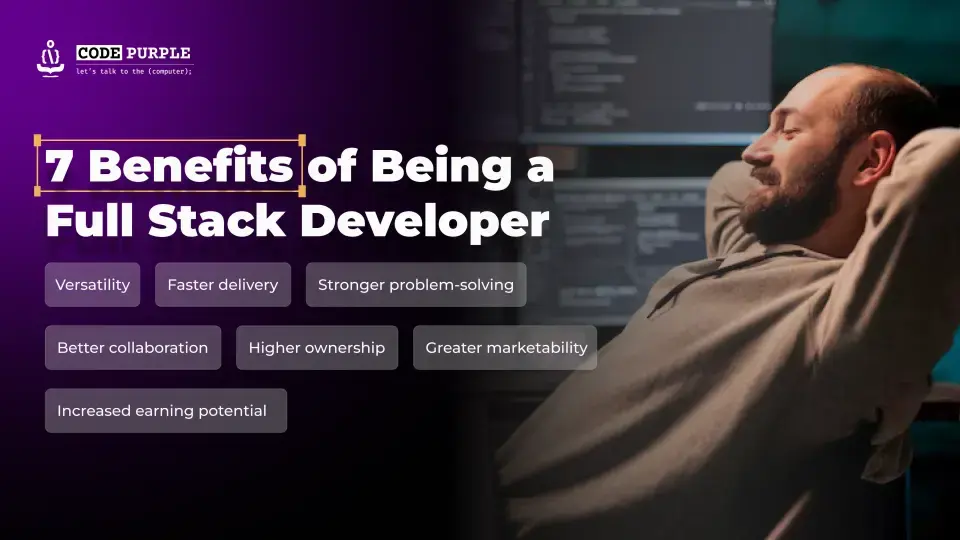
In full stack development, the “unfair advantage” comes from understanding and shaping the entire product, not just one part. Seven core advantages often stand out: versatility, faster delivery, stronger problem-solving, better collaboration, higher ownership, greater marketability, and increased earning potential. Together, these benefits make you more valuable than someone who works only on front end or only on back end tasks.
Versatility is one of the most visible strengths. When you can work across the stack, you can step in wherever a project is stuck—fixing a UI bug, updating an API, or adjusting a database query. This ability often leads to faster delivery because you spend less time waiting on others and more time moving features forward. To use this advantage, consider rotating your focus regularly: spend one week improving front end components and the next optimizing backend performance.
Full stack development also builds deep problem-solving skills. You see how each layer—interface, logic, and data—affects the rest of the system. Instead of just treating symptoms, you can trace an issue from the user interface down to the database and design a stronger fix. To develop this habit, practice end-to-end ownership: when a bug appears, follow it through every layer until you truly understand the root cause.
Over time, these advantages turn into better career options and higher earning potential. Employers look for people who can take a feature from idea to deployment and keep projects moving with limited resources. To show this in practice, create a small portfolio of full stack projects and document your choices at each layer. Explain the tools you used, the trade-offs you made, and the outcomes you achieved. This positions you as a strategic, impact-focused full stack developer.
Full Stack Development in a Competitive Market
In today’s crowded tech market, full stack development stands out because businesses want developers who can deliver complete solutions, not just single features. Many teams are smaller and moving faster, so people who understand both the front end and the back end become key players rather than just implementers. In this context, being “full stack” shifts from a bonus skill to a real competitive requirement.
Efficiency is key in modern development. Setting up Continuous Integration and Continuous Delivery (CI/CD) pipelines helps automate testing and deployment. Tools like Jenkins and GitHub Actions make this possible.
To succeed in this environment, think of full stack development as a way to solve business problems. Your goal is not just to learn tools, but to own a feature from idea to launch. That includes understanding the user need, designing the interface, building the API, wiring up the database, and deploying reliably. For your next project, map out every step—from user story to production monitoring—and make sure you touch each one at least once.
The market also rewards adaptability and measurable results. Instead of trying to learn every new library, choose one main stack and build practical projects that deliver clear outcomes. For example, you might focus on speeding up page load time, improving sign-up conversion, or automating a manual process. To make this concrete, pick a niche such as dashboards or e-commerce and build two or three focused full stack projects. Then highlight specific results in your portfolio and resume. When your full stack development work clearly connects to business value, you become the candidate who brings both technical depth and real impact.
How to Become a Full Stack Developer
To become a full stack developer, start with the core technologies of the web: HTML, CSS, and JavaScript. Once you feel comfortable with these, choose one backend ecosystem—such as Node.js, Python with Django or Flask, or Java with Spring—and learn how to build simple APIs. In parallel, practice working with databases like PostgreSQL, MySQL, or MongoDB so you can store and retrieve data confidently. Think of this journey in stages so you do not overload yourself with tools all at once.
A project-first approach works well here. Begin with a simple idea like a to-do list, notes app, or personal blog, and build the full flow from scratch. Design the layout, code the front end, set up the server, connect the database, and deploy the app. Then move on to slightly more advanced projects and add one new concept at a time, such as user accounts, payments, or file uploads. This method reinforces your skills and creates real examples you can show to employers or clients.
Beyond pure coding, learn the tools and habits used in real teams. Use Git and GitHub for version control, understand how REST APIs and JSON work, and experiment with deployment platforms like Vercel, Netlify, or cloud providers. Set a 3–6 month roadmap with simple weekly goals: build one feature, deploy one small project, or contribute one bug fix to an open-source repository. By shipping small, complete pieces of work and reflecting on each step, you not only become a full stack developer in name but also develop the mindset needed to thrive in modern, competitive environments.
Conclusion
To close the article, remind readers that combining front end and back end development skills turns a developer into a highly valued, end-to-end problem solver. Emphasize that being a full stack developer is about adaptability, curiosity, and practical problem-solving—not just knowing many technologies. End with an encouraging message: by steadily building full stack skills and real projects, developers can gain a lasting advantage in a fast-changing web development landscape.
Share this article
Ready to Start Your Tech Journey?
Join Code Purple Academy and transform your career with industry-leading courses